If you’re preparing to start the Safe and Sound Protocol, alongside choosing your provider, one of the most important (and most underestimated) decisions you’ll make is the headphones you use.
This isn’t a minor technical detail – it’s crucial. The good news? It’s not about buying something fancy or expensive. Phew.
The headphones you choose directly affect how the SSP music reaches your nervous system. The wrong setup can block, distort, or interfere with the very signals SSP relies on to help reset your nervous system. When that happens, people can feel like the protocol “didn’t really do anything”. And nobody wants that.
In this article we’ll walk you through why your ssp headphones matter, exactly what Unyte recommends, what to avoid, what to do if headphones feel overwhelming, how SSP headphones differ from RRP, and our best tried-and-tested headphone recommendations for adults, children, and different budgets.
Why Do I Need Headphones to Do the SSP?
The Safe and Sound Protocol music is not just any old music.
It’s a listening intervention designed to work through the auditory system, specifically the middle ear muscles, which play a key role in how the nervous system detects safety and threat.[*]
Your nervous system is constantly scanning your environment for cues of safety and signs of threat.[*] Long before your thinking brain weighs in, your body is asking one core question:
Am I safe right now, or do I need to protect myself?
Sound is one of the ways your nervous system answers that question.
The problem is that in a modern age of constant demands, pings, tasks, and stressors, our ability to distinguish between what is actually a threat and what is not has gone haywire. SSP aims to help retrain the system to recognise what is genuinely safe and what isn’t.
SSP uses specially filtered music to deliver sound frequencies that are associated with safety – similar to the tones of a calm human voice. These frequencies gently exercise the middle ear muscles, helping them become better at picking up cues of connection and safety instead of defaulting to protection and hypervigilance.[*]
When this system starts working more efficiently, the nervous system can begin to stand down from chronic protection mode.
For that to happen, the special frequencies have to be delivered accurately, consistently, and without interference.
That’s where headphone choice comes in.

What Kind of Headphones Do I Need?
According to the official guidance from Unyte:
Safe and Sound Protocol headphones should be
✅ Over-the-ear (circumaural) headphones
This means the headphones should fully surround the ear, allowing the SSP frequencies to reach the middle ear properly.
✅ Used with a stable audio connection
Wired headphones are ideal because they provide consistent, uninterrupted sound.
Bluetooth can be used, as long as:
- The connection is stable
- The sound does not cut out
- You arrive at your onboarding session already paired and connected
Safe and Sound Protocol headphones should NOT
❌ Be Noise Cancelling
We often see people assume noise-cancelling headphones are a good option, but that’s not actually the case. Unyte explains that noise-cancelling headphones emit a low-frequency sound that interferes with the mid-frequency sounds in the environment. Those mid-frequencies are exactly what the SSP relies on to do its job. On top of that, noise-cancelling headphones can create a more isolating listening experience, which may not feel safe or supportive for some nervous systems.
❌ Be Ear Buds or In-Ear Headphones
Ear buds and in-ear headphones do not deliver the music effectively.
❌ Have Sound Enhancements or Equalizers
Bass boost, surround sound, spatial audio, or audio optimisation features should be disabled. SSP music needs to be heard exactly as it is.
If your phone doesn’t have a headphone jack
Most phones these days don’t have a headphone jack. You’ll likely need a simple 3.5mm adapter to connect your headphones. One end of the adapter should accept a standard 3.5mm headphone plug, and the other end will need to fit the charging port on your specific phone. They’re inexpensive and widely available from online retailers like Amazon.
What If I or My Child Can’t Wear Headphones?
If you or your child are unsure if you will feel comfortable wearing headphones, there are some gentle ways to test tolerance:
- Start with something familiar. Try listening to your favourite songs using the headphones you plan to use for SSP. If you’re not used to wearing headphones, this helps your nervous system get used to the sensation in a low-pressure way.
- Begin with the SSP “Connect” pathway. SSP Connect is the unfiltered version of the program. For sensitive systems, this can be a softer introduction both to the music itself, and to wearing headphones
- Start with smaller listening sessions. Whether you begin with Connect or Core, if you are headphone hesitant you should start with small listening sessions to allow your system time to comfortably and safely adapt.
- Use a low volume. Starting with a low and gentle volume can help reduce overwhelm while you build headphone tolerance.
- Listen in a familiar, safe environment. Where you listen matters. A calm, predictable setting can make a significant difference to how your nervous system responds.
- Gradually increasing exposure over time. Starting low and slow is ok. There is no rushing when it comes to the nervous system. You should increase your listening time with headphones only when you and your provider feel you are ready.
If you are unsure about using headphones, please let your provider know.
Speaker use for SSP
For some people, wearing headphones just isn’t possible or doesn’t feel comfortable. Don’t worry, you can absolutely still use the Safe and Sound Protocol.
If headphones feel overwhelming, there is an effective alternative. SSP can be delivered through small, high-quality speakers, this is particularly helpful for:
- Young children or adults who do not like headphones
- Those with sensory sensitivities
- Clients with mild tinnitus
- Those with trauma histories
- Clients with neurodivergent nervous systems
- and…pets!
If you would prefer to use speakers, you should discuss the set up with your provider.

Can I Use Bone Conduction Headphones for SSP?
No. Bone conduction headphones bypass the middle ear entirely and send sound vibrations directly through the skull. Because SSP relies on stimulating the middle ear muscles, bone conduction headphones are not appropriate for this protocol.
What Headphones Do I Need for Unyte’s RRP Protocol?
Unyte’s Rest & Restore Protocol (RRP) does not rely on middle ear muscle stimulation in the same way SSP does. As a result, the audio requirements are far more flexible.
For RRP, Unyte allows:
- Over-ear headphones (circumaural preferred)
- Noise cancelling headphones if listening in a busy environment
- On-ear headphones
- Earbuds
- Good-quality external speakers
The Best Safe and Sound Protocol Headphones
Our Mid-Range Favorite:
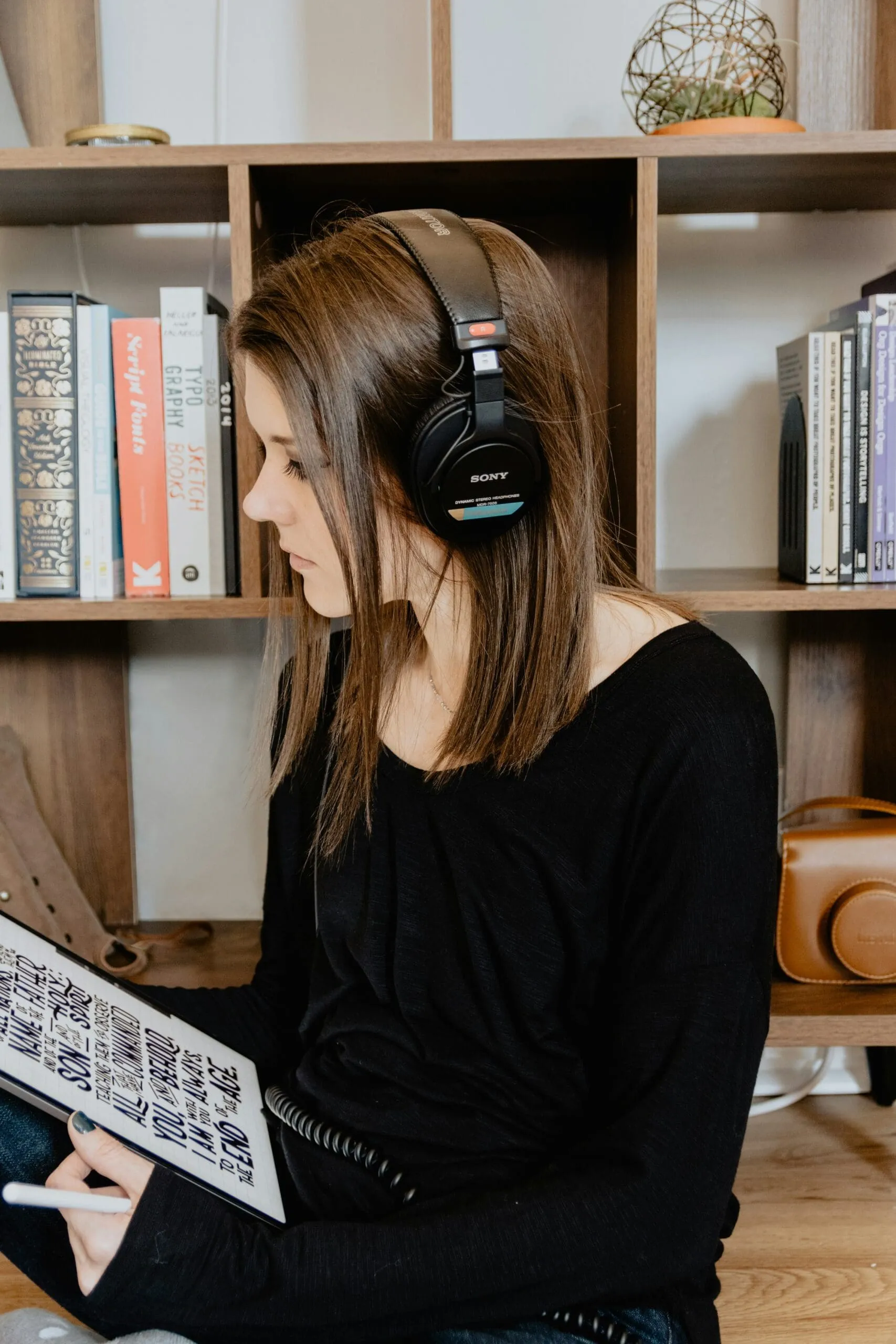
Sony MDR-7506
- Clear, accurate sound in the critical mid-frequency range
- Wired, over-ear design with no noise-cancelling or sound enhancements
- Comfortable fit
- Durable and reliable
Budget-Friendly (and Overall) Favorite
Affordable without sacrificing effectiveness.
- Solid sound delivery
- Comfortable fit
- Simple, no-frills design
Kid-Friendly Choice
Designed with children in mind.
- Lightweight and comfortable
- Volume-limited for safety
- Less intimidating for younger listeners
We are here to help
Getting the right Safe and Sound Protocol headphones might seem like a small detail, but they’re the key to unlocking the full potential of SSP. The right pair ensures every carefully designed sound reaches your nervous system exactly as it should – helping you, your child, or even your pet feel safe and supported.
If any of this feels confusing, reach out to us with your questions. We’re happy to help!